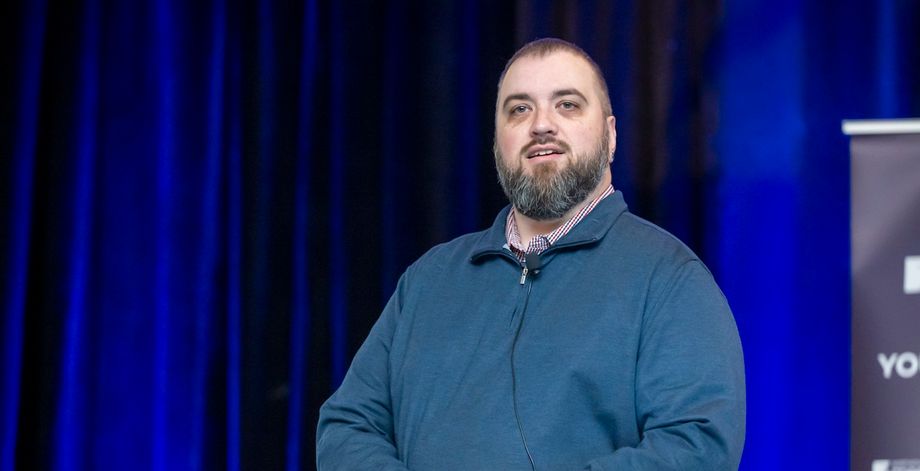
 Nick Borelli at IPEC, explaining ways in which AI can serve the needs of independent planners. Photo Credit:Matt Klinger/Mad Pix Pro
Artificial intelligence has the power to take traditional event planning to a much higher level, says Nick Borelli, marketing director of Zenus, an AI-driven platform that measures attendee sentiment. AI tools aren’t a replacement for human creativity, but rather a catalyst for innovative thinking and problem-solving, he told a record crowd of 255 meeting professionals at Northstar Meetings Group’s annual Independent Planner Education Conference last week in Greenville, S.C.
AI education is one facet of a new partnership between Northstar and Zenus, designed to help meeting professionals integrate AI into their planning processes, improve ROI and elevate the attendee experience. Such sessions and tech experiments will be featured at several Northstar events worldwide, including SMU International, March 11-13 at the New York Marriott Marquis; the Meetings Show Asia Pacific, April 17-18 at Marina Bay Sands in Singapore; and the Meetings Show, June 19-20 at Excel London in the U.K.
AI will enhance your productivity, not replace you
While many fear that AI threatens their livelihood, the events industry seems uniquely buffered against this, Borelli assured IPEC participants. “Human strengths — such as creativity, empathy and contextual understanding — are essential for creating successful events,” he said. “The messy and creative nature of event planning suggests that AI might not excel in this field.”
While it’s useful for getting newcomers up to speed, the expertise of seasoned event professionals will set them apart when they harness the power of AI, Borelli emphasized. “Adopting AI is not just about using technology for the sake of it, but leveraging it to elevate events, crush limitations and achieve the extraordinary.”
Following are 12 ways AI can help meeting professionals design exceptional events.
1. Invite AI to the planning committee.
AI can streamline the creation of social media content, speed up the design of business plans and brand strategies, or even aid customer service. By leveraging AI platforms like ChatGPT, event planners can streamline tasks, gather insights and ensure that every element of an event aligns with the mission, vision and values of the organization. (Several planners have even collaborated to demonstrate how AI can help plan an entire meeting — about AI.)
2. Let AI fuel your creativity.
Generative AI platforms such as ChatGPT or Spark learn from the vast amount of data they receive and can generate content and suggestions based on that. So, provide specific details about your audience, mission and vision, and then ask for creative ideas in the early planning stages of your project. Experienced planners can discern which ideas are of value, and then prompt the platform with follow-up directions that help to produce relevant suggestions they might not have otherwise considered. (Delve more deeply into the topic by viewing the recent webinar, "AI and the Business Events Industry.")
3. Employ a highly efficient, low-maintenance, unpaid assistant.
AI can effectively automate tasks, streamline processes and provide valuable insights. However, it's crucial to recognize that AI is an assistant, not a manager. The unique strengths of event planners — including linear thinking, creativity and empathy — complement AI's capabilities. Treat the AI platform like an assistant, and provide very specific instructions about the task at hand and the results you expect.
4. Gain deeper audience insights.
AI can help event professionals gather relevant information about attendees very quickly. By using AI to analyze available registrant data — such as LinkedIn profiles, for instance, if your attendees opt in — planners can approach meetings with a better understanding of the individuals who will be there. This not only enhances personalization but also contributes to building meaningful connections during events.
5. Put science behind matchmaking.
And speaking of connections, the future of events lies in AI-driven matchmaking, says Borelli. AI-driven tools such as Grip or Brella offer a more targeted and efficient approach to networking or appointment scheduling. Such tools can analyze vast amounts of information about attendees and vendors, helping individuals connect with the right people and organizations. “This goes beyond serendipity and luck,” says Borelli, “providing a more strategic and guaranteed approach to maximizing the value of attending events.”
6. Make your events more inclusive.
Most events are designed for the “typical” attendee. By asking AI to analyze plans from different perspectives, such as for neurodiverse individuals or various demographic groups, we can identify potential areas of improvement and design events that are more inclusive and diverse as a result. “This allows us to create events that are not only good for most attendees but exceptional for everyone,” Borelli notes.
7. Get help with menu planning.
AI can provide insights into dietary preferences, cultural considerations and even aligning menus with an organization's mission, vision and values. By involving AI in F&B decisions, event planners can create meals that appeal to diverse needs and preferences. This approach goes beyond traditional catering, injecting a sense of personalization and empathy into the culinary experience and contributing to the overall success of the event. Just remember, while AI can help brainstorm these ideas and menus, use it as a starting point; it isn’t a substitute for an informed chef or culinary expert schooled in current ingredient availability and costs.
8. Have fun with bios and other content.
Make speaker bios or participant profiles fun with captivating narratives that fit your event theme, such as superhero origin stories, Borelli suggests. “This not only adds a unique touch to each speaker's profile but also makes the event more memorable. AI can analyze the language and tone used by legendary creators like Stan Lee, for instance, and with a simple prompt turn a standard bio into an exciting tale that resonates with the theme of the event.”
9. Harvest and repurpose event content for other uses.
AI-driven platforms like CLIPr, which transcribes and indexes event videos, provide an unprecedented level of efficiency. Imagine instantly creating highlight videos by compiling every mention of a specific keyword across all sessions. This not only saves time, but it creates innovative sponsorship opportunities, helping you to generate content that didn't previously exist.
10. Let chatbots answer common questions.
From pre-event interactions to on-site experiences, chatbots powered by AI (such as those from 42Chat or Spark) can handle repetitive inquiries, freeing up planners to focus on more complex issues. This not only improves efficiency but also ensures that attendees receive prompt and accurate information.
11. Track audience engagement in real time.
Facial analysis, which is the technology provided by Zenus, can provide valuable insights into audience demographics and engagement levels without the collection of any personal information. By analyzing facial expressions anonymously, the AI-driven tech can gauge the impact of individual sessions, sponsored activations, and even signage or promotional materials — and provide insight as to which demographic groups it’s resonating most with.
12. Monitor relevant social media activity.
“Social listening” powered by AI can extend beyond the event, helping organizers understand broader industry trends and sentiment. This information can inform future event planning, ensuring that content and themes align with the interests and concerns of the target audience.