 Photo Credit:Syda Productions for Adobe Stock
Cases of Covid, flu and other respiratory illnesses are elevated and rising throughout most of the United States, according to the latest statistics from the Centers for Disease Control and Prevention. As of Dec. 29, reported cases were highest in the southeast, southern and western states.
What’s happening near you or your meeting destination? Consult the CDC’s state-by-state map of respiratory virus activity levels, which is updated weekly. The agency also provides details by county.
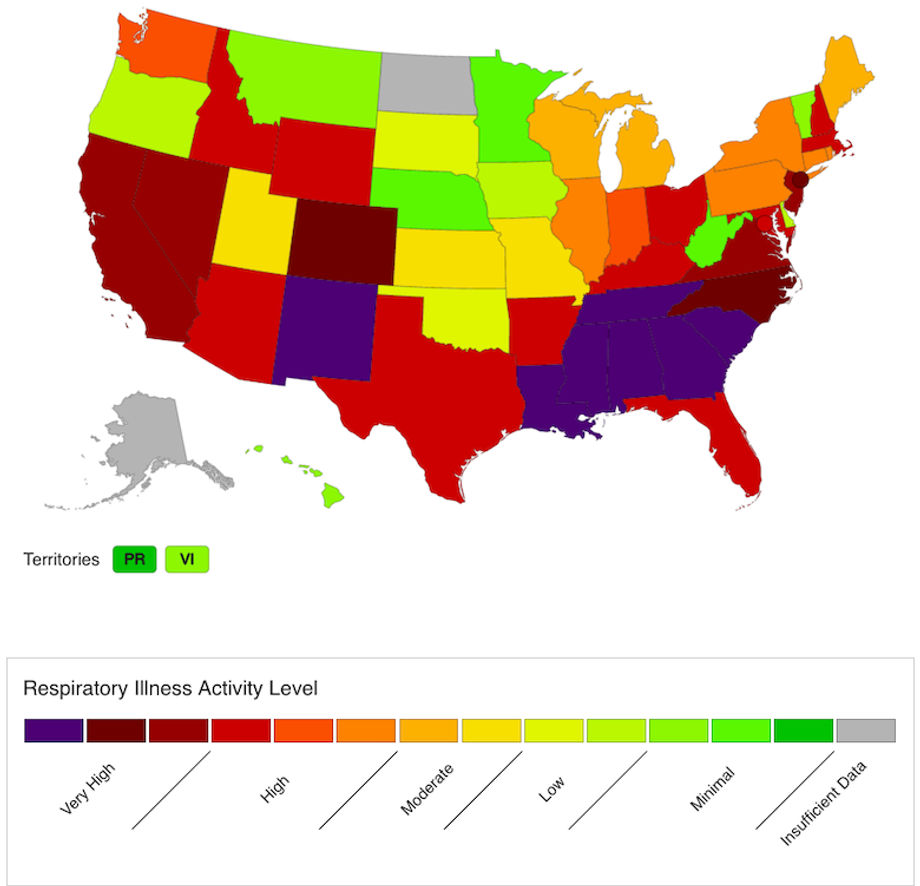 Source: CDC data as of Dec. 28, 2023
Covid's latest strain
JN.1, a variant of the virus that causes Covid-19, is a closely related offshoot of the variant BA.2.86 that the CDC has been tracking since August. JN.1 comprises up to 50 percent of circulating variants and is growing more quickly than other variants. JN.1 is either more transmissible or better at evading our immune systems, patterns suggest, although it does not seem to cause more severe illness than other strains. The current vaccines, tests and treatments for Covid-19 continue to work well against JN.1.
It's not too late to get vaccinated
While respiratory illness activity is rapidly increasing, vaccination rates for Covid-19, influenza and respiratory syncytial virus (RSV) remain low. Millions of people may get sick in the next month or two, the CDC cautions, and low vaccination rates means more people will get more severe disease. Getting vaccinated now can help prevent hospitalizations and save lives.
The CDC recommends that all people 6 months and older stay up to date on Covid-19 vaccines and receive a seasonal flu vaccine. Those 60 years and older should ask their health-care provider if an RSV vaccination is advisable.
Antivirals are effective
Antivirals are an important tool for treating people with Covid-19 but they remain underused, according to the CDC. These treatments reduce hospitalizations and deaths among people at higher risk, especially people 65 years and older and those with certain underlying conditions. Hospitalizations are on the rise, more so for people 65 and older. The CDC recommends that Covid-19 antivirals be prescribed more often to people who are at risk for severe illness.