
June 8 is World Oceans Day, an initiative aimed at celebrating our blue planet and the water oasis that connects us all. In honor of the annual movement, hotels and resorts around the globe -- many featuring their own sandy shores and oceanfront amenities -- are highlighting their conservation concerns and capabilities, and are inviting guests to lend a helping hand.
Hotel Initiatives Poised for Marine Conservation
Banning Single-Use Plastics
According to Ocean Crusaders, a group formed to educate people on leading maritime issues, 100,000 marine creatures die from plastic entanglement each year, along with an additional 1 million sea birds. In response to the threat, many hotels and resorts have taken to banning single-use plastic products such as water bottles, straws and utensils.
To protect its local manatee and marine populations from plastic choking hazards, Key Largo's Playa Largo Resort & Spa has banned the use of disposable water bottles, instead investing in reusable glass tumblers. All 178 guest rooms at the resort comes equipped with two so that travelers can take the bottles anywhere they go.
Similarly, Club Med has made it mandatory for all establishments to carry out a "Bye Bye Plastic" program, which bans single-use plastics from all resorts globally. In all East and South Asia Pacific resorts, the initiative has replaced disposable plastic cutleries with melamine and plastic cups and straws with paper. Paper straws are only provided upon request as part of the group's policy, enacted through the Green Globe certification of the resorts. Moving forward, all North American/Caribbean resorts will feature staff uniforms made entirely from recycled plastic by the end of next year.
Safer Sunscreening
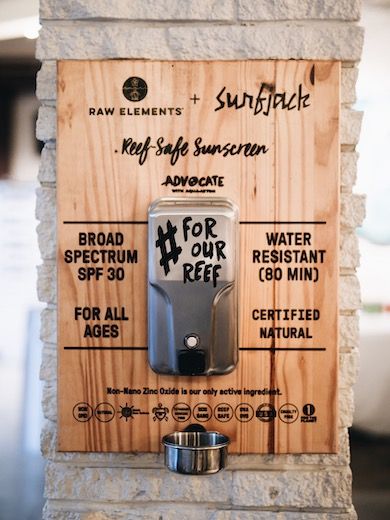 Reef-safe sunscreen dispensers at Surfjack Hotel & Swim Club
Many resorts have taken to providing their guests with complementary reef-safe sunscreen formulas free of harmful chemicals and other ingredients. Among destinations in support of the movement, the 311-room Casa Marina and 150-room The Reach, both Waldorf Astoria Resorts, have begun offering traditional sunblock alternatives made with Raw Elements, and Waikiki's Surfjack Hotel & Swim Club comes equipped with several on-site, natural sunscreen dispensers to service its 110 hotel rooms.
Jamaica's 495-room Hilton Rose Hall Resort & Spa is one of the many other locations also producing its own formula of environmentally safe and biodegradable sunblock.
Restoring the Reefs
Coral reefs are important for many different reasons aside from supposedly containing the most diverse ecosystems on the planet. According to the Queensland Museum's biodiversity program, they protect coastlines from the damaging effects of wave action and tropical storms, provide shelter for many marine organisms, are the source of nitrogen and for marine food chains, assist in carbon and nitrogen fixing and help with nutrient recycling. Therefore, countless hotels are taking action to preserve these multifunctional, living communities.
.jpg?tr=w-390%2Cfo-auto "turtle-habitat") Underwater marine and coral habitat at Lions Dive & Beach Resort
Underwater marine and coral habitat at Lions Dive & Beach ResortTo protect Curaçao's oceans and keep the reefs healthy, the Coral Restoration Foundation has created a coral tree nursery in the 137-room Lions Dive & Beach Resort house reef. The area features 10 coral trees made of PVC pipe and floating buoys and 4,000 staghorn and elkhorn coral fragments that have been planted back into the island's existing reefs.
Also in tandem with the CRF, Florida's Bakers Cay Resort offers one-on-one and group diving classes to help guests at the 200-room property participate in restoring local reefs.
Treating the Turtles
Because Mexico's Quintano Roo beaches are a key site for nesting, Panama Jack Cancun has formed an annual “Turtle Protection Committee” that leads beach cleanups, nest building at the on-site turtle farm and ecology courses for employees. The resort recently launched a new “Sea Turtle Package” for guests of its 487-room property which includes themed amenities, a donation to the Sea Turtle Conservancy and hands-on sessions aimed at learning more about conservation efforts. So far, Panama Jack has created an environment that yields 10,000+ hatched sea turtle eggs per season.
In collaboration with the Barbados Sea Turtle Project, Turtle Beach Resort's expert team of “turtle pioneers” strives to teach guests about marine conservation and how to reduce their carbon footprint. During the summer months, guests at the 161-room lodging are likely to spot sea turtle hatchlings and can help in leading baby turtles by flashlight back to the ocean. Similarly, guests staying at the 433-room Marriott Puerto Vallarta Resort & Spa can
join resident biologists for a nighttime stroll along the beach to monitor the nesting turtles and learn more about instructions for patrolling
the beach.
Likewise, guests at the 168-room Jupiter Beach Resort & Spa can book the "Stay & Save the Sea Turtles" package, enabling a portion of their proceeds to be donated to the local Loggerhead Marinelife Center, who will adopt a turtle in guests' names.
Aquatic Education
Sometimes, educating hotel and resort guests on the importance of the ocean and its functionality is all it takes.
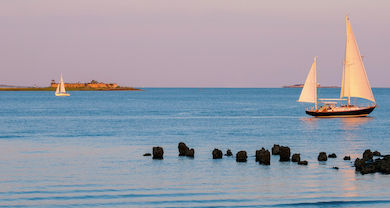 Waterfront view from Charleston's HarbourView Inn
HarbourView Inn, a 52-room boutique property in Charleston, S.C., offers access to behind-the-scene tours of the Avian Conservation Center and Sea Turtle Hospital at the South Carolina Aquarium. Via the tours, guests can learn firsthand about the local ocean ecosystem, wild birds of prey, aquatic animals and endangered species, along with how they can play a part in ocean enhancement.
To take learning directly to the water, a unique program offered by Ecoventura, a fleet of sustainable yachts in the Galapagos, puts travelers face-to-face with sea lions and blue footed boobies on seven-night eco-friendly excursions. To protect the region's oceans and unique species, Ecoventura and the World Wildlife Fund created a partnership to benefit the Galapagos Marine Biodiversity Fund.
Reusing the Waters
In a very unique approach to coastal conservation efforts, Hilton Rio de Janeiro Copacabana, the first hotel in Latin America to introduce the ORCA system, can transform up to one ton of organic waste into reusable water every 24 hours to service its 545-room lot.
Cleaning the Beach
What better way to celebrate World Oceans Day this weekend than helping first-hand on the beach? The 426-room 1Hotel South Beach is teaming up with Debris Free Oceans, Volunteer Clean Up and #PlasticFreeMB on June 8 to beautify the shores of South Beach. Along the way, participating beach cleaners will stop to wet their whistles at local bars for complementary cocktails.
For a list of local World Oceans Day initiatives in your area, contact the World Oceans Day Organization.