There was a time when people went to casinos expressly to gamble. But about 30 years ago, meetings and events at gaming destinations began to gain some serious traction.
In 1989, The Mirage appeared on the Las Vegas Strip, ushering in the birth of the integrated resort, drawing crowds with attractions beyond the casino. The Mirage had a volcano, white tigers and an aquarium to sweeten the experience for all who entered. Today, gaming companies across the nation are building hotels with meeting space, top-notch restaurants, high-end shopping and expansive meeting space.
“It’s easy to see why casinos have become a popular destination for meetings and conferences,” notes Casey Clark, vice president of strategic communications for the American Gaming Association. “Over the past few decades, we’ve seen the casino industry transform into a full-fledged entertainment purveyor. The rapid spread of integrated resorts across the globe demonstrates this evolution of casinos into world-class entertainment destinations. These days, almost half of casino visitors make the trip for nongambling activities.”
And revenues from those nongaming activities account for an increasing percentage of the money earned by gaming companies. If that trajectory continues, how will it affect the casino resorts of the future — and what will it mean for the meetings industry? We asked gaming experts for their perspectives.
The Evolution of Gaming Resorts and Events
1. Increase in Nongaming Revenue
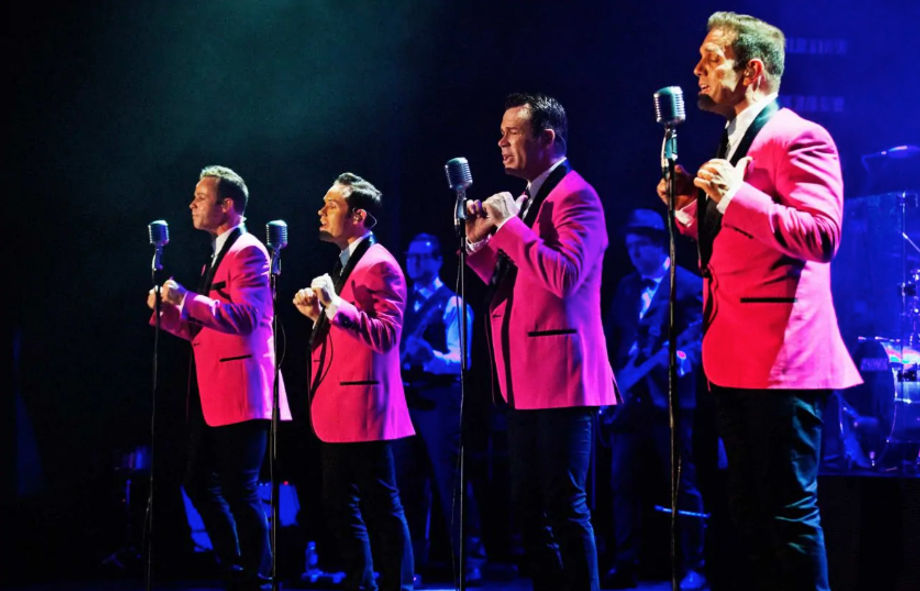 "Human Nature Jukebox" entertainment at the Venitian Las Vegas - the "ultimate jukebox party" Photo Credit: The Venitian Las Vegas
“I do expect the increase in nongaming revenues to continue, particularly in Las Vegas, as gaming options around the country — and the world — proliferate,” says David Schwartz, associate vice provost for faculty affairs at the University of Nevada, Las Vegas. Schwartz previously served as the director of the Center for Gaming Research within University Libraries at UNLV.
“Particularly as digital and remote gambling becomes more widespread, many types of gambling will not be as common in casinos,” Schwartz posits. “For this reason, investing in nongaming attractions is a good strategy for gaming companies. I think that group meetings — which inherently require travel — are a wise option. Planners can emphasize the overall impact their groups will have on visitation and F&B and entertainment spending, in addition to the direct fees involved with the meeting.”
 Michael Dominguez, chief sales officer for MGM Resorts International
Michael Dominguez, chief sales officer for MGM Resorts International, confirms that nongaming revenues continue to be the largest part the casino giant’s business today. “Demographic and psychographic changes have influenced that behavior,” he points out. “Integrated resorts are very much that — integrated. The meeting community is already benefitting, with unique venue options that you will not find anywhere else in such a compressed area.
“For example, culinary and entertainment experiences that match the top destinations in the world are now a reason many come to Las Vegas,” Dominguez adds. “This is best showcased with new additions like the Park Theater, which is attracting top artists for local residencies, as well as true culinary experiences like the new Eataly gourmet market [in the Park MGM] — all of which become a benefit to our meeting and event organizers.”
2. Small Meetings are More Important
Planners hoping to capture the attention of casino-resort operators with their business should be acutely aware of their historical group spend. “Casinos want to see attendees who are not averse to spending money on F&B and entertainment,” says Schwartz of UNLV. “If a group is primarily comprised of affluent attendees who will use the amenities of the resort, that is much better for the property’s bottom line than a bigger group that brings less ancillary spend.”
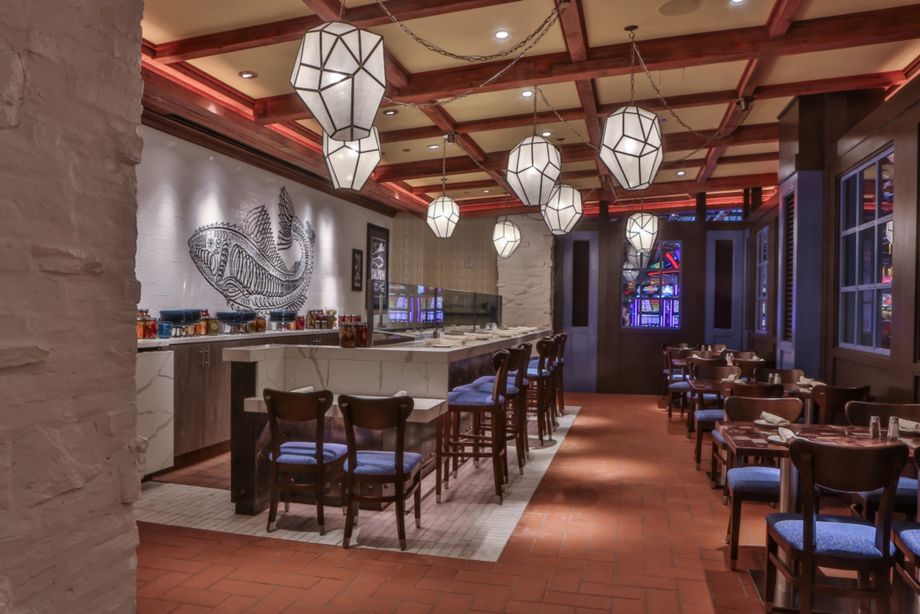 The Berks Meeting Room at Sands Bethlehem is 1,180 square feet Photo Credit: Emrils Restaurants
This method doesn’t sound so different from the way a planner should approach most destinations — and that’s precisely the point MGM’s Dominguez wants to make. “That is probably one of the biggest misconceptions regarding integrated resorts — that we wouldn’t evaluate group business like any traditional hotel,” he says. “We now evaluate group business as any other major destination does. We look at rooms revenue, F&B contribution and overall revenue per occupied room.”
 Michael Massari, chief sales officer at Caesars Entertainment
And despite the massive megaresorts that populate the Strip, such facilities thrive on smaller meetings, too. “A large percentage of meetings that travel to Las Vegas consists of groups of less than 100 attendees,” notes Michael Massari, chief sales officer at Caesars Entertainment. “We welcome meetings of all shapes and sizes, from intimate C-suite executive board meetings of 10 to international conventions of 10,000 — all under one contract and F&B minimum, which provides our meeting planners with countless options within our Las Vegas portfolio.
“We’ve also heard the demand from meeting planners to have an open space that can be easily divisible,” Massari adds, “and that’s why we’ve invested in building Caesars Forum, a 550,000-square-foot conference facility opening in 2020.”
3. Growth of Data Collection and Personalization
Delivering a personalized experience to event attendees is of the utmost concern to planners today — as it is to hospitality companies, all of which seek a deeper connection with guests to build brand loyalty. In some ways, integrated casino resorts are in a unique position to learn the most about their guests. After all, they have everything sitting under one roof:
- Hotel rooms
- Restaurants
- Retail
- Entertainment
- Gambling
“Personalization and an enhanced experience is a priority,” says Caesars’ Massari. "We offer our meeting planners the Diamond Card, which provides a range of hotel, shopping and entertainment benefits, as well as exclusive access including priority lines at hotel check-in, VIP reservations and much more." They also roll out the red carpet through personalized amenities, including:
- VIP butler service
- In-house spa treatments
- The latest entertainment and shows
- Specialized dietary requests
"From the moment our attendee is picked up from the airport to the final farewell power breakfast, it’s crucial to create a customized and curated hospitality experience throughout their stay to make a lasting impact.”
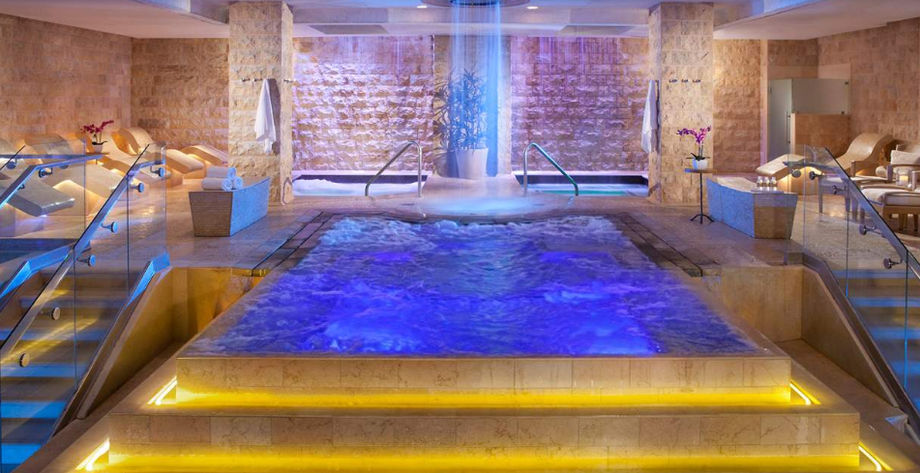 The Qua Spa and Baths at Caesar's Palace in Las Vegas
The specific data-tracking capabilities across a resort’s entire range of offerings can present challenges. The hospitality might be perfect, but will an attendee’s preferences and experiences be properly accounted for — and anticipated — on future visits?
“I think at one point casinos had a reputation as the leader in player tracking,” says David Schwartz. “The advent of digital technologies, though, might leave them in the dust. The opportunity is for casinos to leverage their existing databases in ways that make sense for convention guests. Gaming is usually not a huge part of the convention-guest spending profile; but when it is, those guests need to be properly recognized. Casinos can look at automatically enrolling attendees in their rewards program as they sign up for the conference, which if nothing else broadens the marketing funnel.”
MGM’s Dominguez likewise sees tremendous opportunities here. “Integrated resorts have done this quite well in the gaming arena, and the focus now is to personalize the experience to all guests in a way that is memorable and experiential,” he says.
4. Increasing Importance of Sports and Group Business
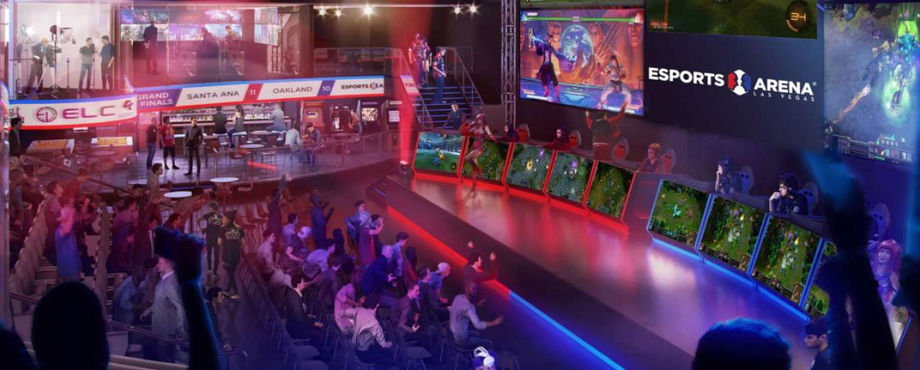 Facilities such as the 30,000-square-foot Esports Arena Las Vegas at the Luxor Hotel are springing up, outfitted with stadium seating and serious bandwidth for live-streaming broadcasts of esports events.
Sports has been a huge topic in the gaming world of late, both in terms of legalized betting and the skyrocketing popularity of esports. What remains to be seen, though, is just how much this attention will affect group business in general.
 David Schwartz, associate vice provost for faculty affairs at the University of Nevada, Las Vegas
UNLV’s Schwartz says the effects could be tangible. “I think that sporting events, both live and simply for viewing or betting, have a large potential for group travel,” he asserts. “We’ve seen this with March Madness and the Super Bowl in Las Vegas. If a resort created an easy-to-use way for a small group to put together a room block and reserve seats or buy tickets for a viewing party, and arrange their meals, it would be very successful.”
Sportsbook facilities are debuting across the country, where sports betting is being newly embraced, but they’re also being beefed up in Las Vegas, already a mature member of this market.
“Recently, the Linq Hotel & Casino introduced the most experiential and technologically savvy sports bar, entertainment and meetings venue, The Book,” notes Caesars’ Massari. “The Book is immersive, socially driven, and features 87 televisions and the Strip’s highest-resolution LED video wall.”
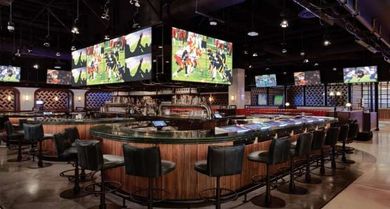 MoneyLine Sports Bar and Book at the MGM Grand Las Vegas
Another recent debut, Moneyline Sports Bar & Book in the Park MGM, offers year-round wagering opportunities within a sports-bar atmosphere — complete with pool tables and duckpin bowling. While traditionally relegated to a roped-off section of the casino, sportsbook facilities are increasingly being offered as part of a group-event-friendly venue — a trend that could play out at gaming facilities across the country.
And then there is the billion-dollar market known as esports, or competitive video gaming. Facilities such as the 30,000-square-foot Esports Arena Las Vegas at the Luxor Hotel are springing up, outfitted with stadium seating and serious bandwidth for live-streaming broadcasts of esports events.
“Esports has exploded over the past three years,” says Dominguez. “The engagement of these groups, and how they keep that engagement strong in-between live event schedules, is probably the most valuable insight that’s being passed to the meetings industry overall.”
Looking to the Future
To better understand the casino-resorts of tomorrow, we can simply look at what the big players are investing in today. “You will continue to see spaces and venues that are created around wellness and behavioral science,” predicts Dominguez. “We are committed to and have been leading in the area of wellness with our partners at Delos Living, and utilizing the latest science to build spaces that are most conducive to fostering collaboration, engagement and mental acuity.”
MGM recently wrapped up a major conference center expansion at the MGM Grand in Las Vegas, adding a floor’s worth of its Stay Well Meetings space. And the company’s newest venue in Park MGM, the Ideation Studio, was designed with behavioral-science principles in mind.
The big gaming players also will continue to invest in guest data and insight initiatives. “I think they will want to cater to customers who demand more convenience and choice than ever before,” says gaming historian Schwartz. “Customizable experiences, with individually tailored itineraries, may help resorts sell themselves in an age of less gambling in casinos.”
Expect continued expansion as well. “While new industry trends will come and go,” says Caesars’ Michael Massari, “along with the continual evolution and advancement of technology in our digital age, we truly believe that face-to-face meetings will still be important. We just need to build spaces that make this possible.”