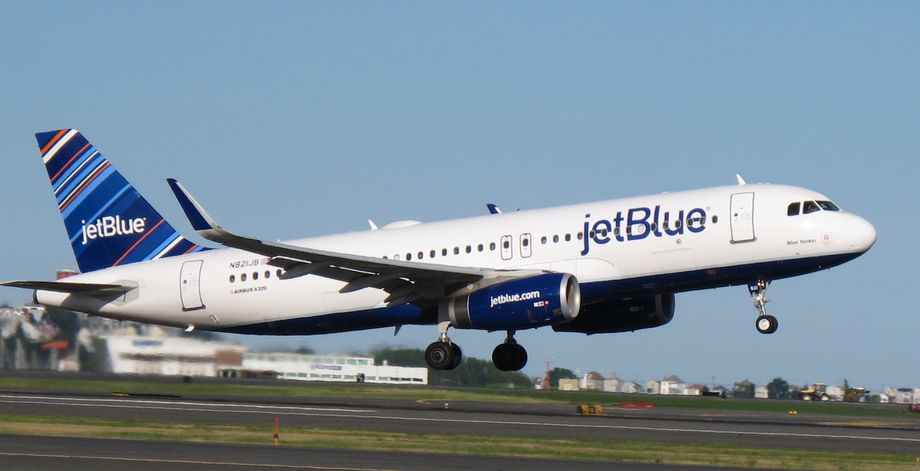
The planned $3.8 billion merger of JetBlue and Spirit Airlines likely will see a challenge from the Justice Department, according to a Politico article that sites five unnamed people with knowledge of the matter. A lawsuit to prevent the carrier tie-up would be in keeping with the Biden administration's antimonopoly stance, as well as frequent calls from top officials to intensify federal oversight of the aviation industry.
In an investor call last week, Spirit Airlines CEO Ted Christie said he expects to hear from the Justice Department about their decision within the next 30 days, according to a transcript on SeekingAlpha.com.
"We are now waiting to see whether the Department of Justice filed suit to block the deal or allows us to proceed," the Spirit CEO said.
As the companies await word from the government, JetBlue will be continuing to honor the July 2022 merger agreement and make a prepayment to Spirit stockholders later this month. Neither company anticipated the deal would be approved quickly; since the original agreement was struck, JetBlue has anticipated a closing date for the merger in late 2023.
Meanwhile, JetBlue and American Airlines are still awaiting a Justice Department ruling on a codesharing agreement they established in 2020, known as the Northeast Alliance. That program has JetBlue and American partnering on some routes, and on bookings involving airports in New York City and Boston. The two airlines have maintained that the alliance increases competition for Northeast routes and ultimately benefits travelers.
According to a court filing quoted in the Politico article, the Justice Department is using the JetBlue-American suit to fuel its case against the JetBlue-Spirit merger: "Threatening to compound the anticompetitive effects of the [Northeast Alliance], JetBlue has recently entered an agreement to acquire yet another disruptive airline, Spirit Airlines. That transaction, combined with the NEA, now risks placing not one, but two low-cost airlines under the thumb of [American Airlines], neutralizing the disruptiveness [of the low-cost airlines] and aligning their interests with those of the largest airline in the world," the filing alleges.