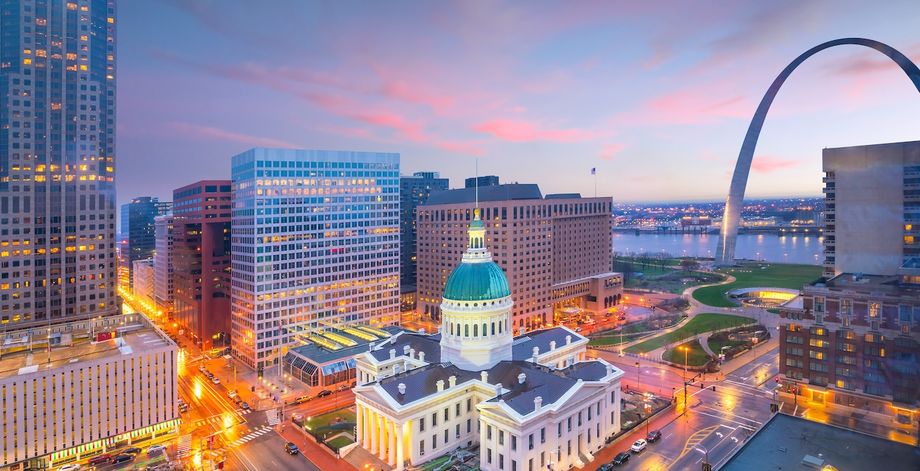
 Photo Credit:f11photo for Adobe Stock
Nearly 2,000 event professionals descended on St. Louis last month for Meeting Professionals International's 2025 World Education Congress, held June 18-20 at the America's Center in St. Louis. According to Brad Dean, president and CEO of Explore St. Louis, this is an especially exciting time to host such a large gathering, as the city is in the midst of a renaissance. Not only is the convention center undergoing an expansion, but new projects are being planned to enhance the downtown area, and the airport will soon undergo a multimillion-dollar renovation.
Dean, who joined the city's convention and visitors bureau in February, sat down with us at the convention to discuss the event's impact on St. Louis, as well as other developments that will add to the city's appeal as a top Midwest meetings destination.
This conversation has been edited for length and clarity.
What brought you to St. Louis?
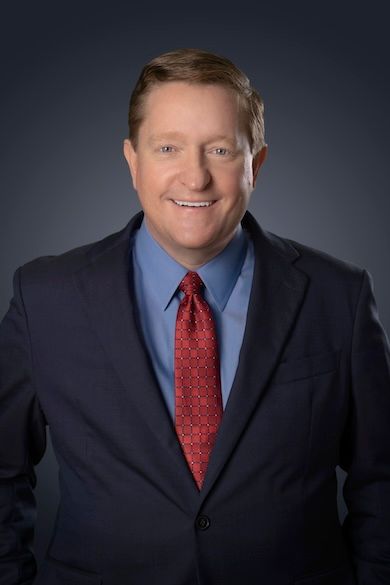 Brad Dean, president and CEO, Explore St. Louis Photo Credit: Explore St. Louis
The first vacation I ever took as a kid was actually to St. Louis. It was the first time in my life that I realized there was something other than cornfields and factories. To come back here decades later, I still have that seven-year-old kid in me. What sold me on the job, though, is what's taking place here. The momentum is palpable with massive investments already being made and planned.
St. Louis is, like a lot of cities, not without some challenges. But when you look at the investments in the America's Center, it's over a quarter of a billion dollars. The Dome just announced a $54 million investment. A few blocks from here, a massive redevelopment project was just approved for a downtown entertainment district. That's what drew me — this is a market on the move.
What are your goals as head of the CVB?
If you're planning meetings, we want to be the easiest partner you've ever worked with. Unlike a lot of other cities where you have the convention and visitor's bureau and the convention center, we're all one team and one organization here.
So, the destination promotion for both leisure and meetings, the facilities management and all the destination services all fall under one organization. That makes the handoff seamless, easy and simple. In today's environment, where it's more challenging than ever to plan meetings, we think being easy to work with and providing great hospitality is a competitive advantage, and we really want to build upon that.
Secondly, we want to be able to help tell St. Louis' story, from what's taking place now to what's about to happen. We really want to focus more of our efforts on positioning the entire community as part of the experience. I think for a long time the America's Center has been the anchor of our meetings and conventions strategy. Of course it's important, but what really differentiates St. Louis is what happens outside the America's Center.
If you notice during WEC, this is the first time ever that MPI has taken some of the education out of the convention center and into the neighborhoods. That was intentional, to give planners an opportunity to connect with the community. That's not a one-time thing. We're going to continue with that and the focus is to accentuate the neighborhoods which give St. Louis a lot of its unique character and identity.
What is the estimated impact of the WEC, and how did hosting education outside of the convention center come about?
WEC is the gift that keeps on giving. We expect it to produce millions of dollars of economic impact that will sustain thousands of jobs. But beyond the economic impact, the WEC gave our entire community an opportunity to come together to celebrate the importance and impact of meetings.
MPI was a challenge, because planning meetings for meeting planners is like preparing dinner for chefs. They've got a model that works really well, but I have to credit the team for adopting their model to our community. We recognized early on that a successful WEC needs to involve the entire community, so that was an idea that we broached with MPI, and they embraced it and executed it really well. It's a major transition in the programming, but I think it's a great thing for our industry. Younger travelers are more attuned to traveling with purpose and not just traveling for the meeting itself.
Can you share an update on the America's Center renovations?
We're in the tail end of the renovation. The expanded exhibit hall is open, which we've been using for the WEC.
Another part of the expansion and renovation was establishing a culinary garden, which is really a small farm right in downtown St Louis. We're now producing food that will never touch a truck, so it's a step forward in terms of sustainability. Of course, it's limited in terms of how much we can produce, but the chef is able to use that to complement a lot of the meals that we're preparing. [During the WEC] we'll be using some of the first food that we've harvested here.
We've also upgraded and enhanced the loading docks. The remaining enhancements are the things that most attendees will notice first. The main entrance at Washington Avenue is going to go through a significant upgrade on the outside with improved signage and lighting. All told, we still have about 15 to 20 percent of the funds that we're investing as part of the $256 million expansion to the America's Center.
Next up is a $54 million investment in the Dome, which is the stadium attached to the convention center. That's going to be a lot of consumer-facing enhancements like technology, elevators and escalators. Altogether, the upgrades are over $300 million between the two facilities and all of that is intended to deliver more capacity and a better experience for attendees. The Dome investment was just approved two weeks ago and is going to [take place] over the next three years.
What else is new and exciting in St. Louis?
The state legislature and the governor recently approved a new downtown entertainment district. There's also a facility three blocks from here that's going to be turned into a food hall. It will have eight or more concepts and will be great for meeting planners. The Cardinals are beginning discussions about the next phase of upgrades for Busch Stadium. The new soccer stadium, Energizer Park, is now fully open.
Maybe the biggest of all, which planners will appreciate, is a $3 billion commitment to upgrade and expand St. Louis Lambert International Airport. At our current airport, we have two terminals but they're not connected. They'll now be connected in an expanded facility that is much more in tune with the needs of travelers today. Those dollars are committed and they're in the phase now of finalizing plans.
Is St. Louis seeing the decline in international visitors due to recent White House policy changes that other cities are noting?
As of yet, we have not seen an impact on bookings. We do know that there have been some international meetings held in St. Louis where attendance has been impacted somewhat but most have come off well. I would say overall that our travel and hospitality revenues are up year-over-year, so 2025 is actually shaping up to be a really good year for St. Louis. But we are aware that for some of our international partners, there have been impacts to the attendance at their events.
Do you have any strategies to mitigate these impacts and attract international visitors?
St. Louis is one of the most affordable destinations in the U.S. in part because we have tremendously low hotel rates combined with a lot of free attractions. For government meeting planners and international planners who are looking to save money or limit costs, St. Louis becomes a very appealing option.
In addition, we're currently looking to redeploy our sales team and we're looking at a more modern approach, which will be aligned with the needs of both domestic and international planners. It's not necessarily changing the number of salespeople. We're going to approach it differently in terms of a greater focus on key vertical segments, which will allow us to specialize to the needs of the planner.
What are some things planners might not know about the city?
While many know us as a sports town, research tells us that most people really appreciate St. Louis for the rich and vibrant history, culture, art and so many free attractions.
Just down the street we have the National Blues Museum, which is not only a great testament to blues musicians, but they also have live music on a regular basis. The St. Louis Art Museum has Van Gogh pieces, and the Missouri History Museum is about America's history told through the eyes and experiences in Missouri. All of those are in or around Forest Park, which is one of the largest urban parks in North America.
When we think about planners, one of the first questions they ask is, "What can my attendees do outside of the convention center?" The art, the history, the culture and the sports scene really help to define St. Louis as a great destination.