Every year, Incentive brings together a group of industry thought leaders from all segments of the incentive, engagement, motivation and recognition business to talk about the state of the industry. This year, 11 participants
gathered at the
Lotte New York Palace on Madison Avenue and 50th Street in Manhattan to discuss topics that ranged from the C-suite's
growing focus on retaining and engaging top people to the difficulty of retaining Millennials to the importance of ROI, as well as what's happening in the merchandise, gift card and travel award categories. What follows is an extended version of the
transcript of that conversation.
To view video interviews of each Roundtable participant, head here.
PARTICIPANTS
- Paul Gordon, Senior Vice President of Sales, Rymax Marketing Services
- Josh Lesnick, President & CEO, Associated Luxury Hotels
- Richard L. Low, CPIM, Vice President Special Markets, Citizen, Citizen Watch America; Past President, Incentive Marketing Association (IMA)
- Cindy Mielke, CPIM, Director, Marketing & Sales Operations, GC Incentives
- Bob Miller, President & CEO, One10
- Linda Nuss, Regional Manager, North America, German Convention Bureau
- Lynn Pavony, CIS, Director, Incentive Sales, Four Seasons Hotels and Resorts; Vice President, Fundraising and Events, SITE Foundation
- Mike Ryan, Senior Vice President, Client Strategy, Madison Performance Group
- Jennifer Scavina, Executive Vice President and Managing Partner, EGR International Inc./BlackLab Media
- Allan Schweyer, Chief Academic Advisor, Incentive Research Foundation (IRF)
- Hugo Slimbrouck, Director of Strategic Partnerships, Ovation Global DMC; Past President, Society for Incentive Travel Excellence (SITE)
What Are the Hot Award Categories?
RICHARD L. LOW: You look at Amazon and say, "what are the top 10 items in each category, and that’s what’s happening in our world?" People who are program participants are just consumers. They are influenced by the exact same advertising, all the information brands
put out there in social media and print. Right now, the higher-end is doing better than mid-price is.
PAUL GORDON: That’s really across the board, whether it’s a TV, whether its jewelry, whatever it is. People are going to gravitate, because
they’re feeling pretty good. Luxury items are much more in demand in terms of redemptions. Anything with connectivity is very, very hot, whether it’s the Google platform or the [Amazon] Alexa. People want the brand. They want the real deal. Electronics
are always going to be big. Celebrity chefs, in terms of cooking stuff, are very, very hot, as always.
ALLAN SCHWEYER: This year’s IRF Outlook study found the most popular awards are electronics first, sunglasses second, then clothing followed
by open-loop [credit-card branded] gift cards, luggage, jewelry and golf items.
LOW: You see luxury fashion items like watches and handbags really coming on strong in the last six months. People that have 16- to 20-year-old kids, will probably
notice that those kids are starting to wear watches because it’s a fashion accessory. You can’t find a Millennial without the phone in their hand, so no one was wearing watches. Now watches are coming back. We’re actually seeing a nice resurgence
in the watch category and mid-price especially, because you don’t want to buy a 16-year-old kid a $500 or $600 dollar watch. You want to buy a $250 watch. And because it’s a fashion accessory, people are buying more. Instead of buying a $1,500 watch,
they’re buying three $350 watches. Today it goes with black. Tomorrow it goes with brown. Kids are a little more attuned to what’s going on in fashion, so I’m excited about watches.
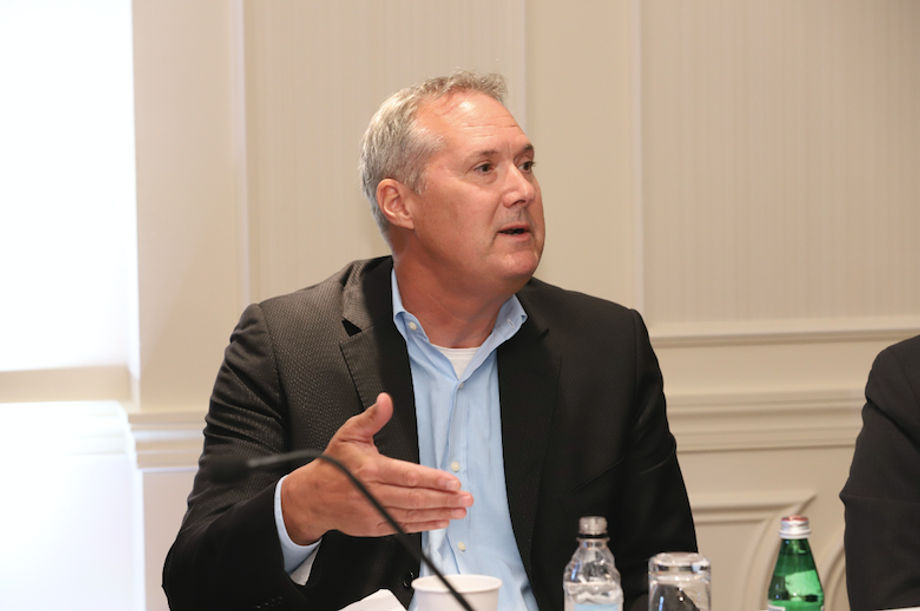 Allan Schweyer
GORDON: There was a time not so long
ago when the demise of watches was predicted. Everybody has a phone in their hand and what do you need it for? Well, people love fashion accessories and there’s that whole category of the fitness [wearables], which is part of it, too, that became
very, very strong.
We took sort of a calculated risk a couple of years ago and really dove deep into the fashion category — handbags and all of that — which is a little tough because fashion is transient. It’s like a golf club. You could
have the best driver for 2018, and on Jan. 1, nobody wants that driver. They want the 2019. It causes a bit of an inventory struggle when things are more transient and fashionable, but that’s sort of where the business is going.
Then
cameras. It’s amazing that the number of images that are captured — billions more than 20 years ago. That’s all based on the phone, and I think the fact that everybody wants to document every single minute of their lives, whether it’s what they’re
eating for dinner or whatever. You can stand in front of the Grand Canyon, instead of looking at it, you've got to take pictures of it to tell your friends "I’m here." But just like there are audiophiles, there are videophiles — there are people who
want better quality. What we’ve seen in the camera business is a shift from point-and-shoots to SLRs. If they’re going to really shoot something that’s of substance, they’re going to want a better quality camera, zoom lenses, things like that. The
point-and-shoot market has shrunk dramatically, but cameras will always be there.
Experiential Awards
GORDON: I think the marriage of travel and products has come together in a bigger way than ever before. I think that people understand that travel is a core part of incentives. People like to get the experience of going someplace and forging relationships
for the next 10 years, but they also like to have the residual value of a product, as well. We’ve done a lot of mini shopping sprees on-site at travel programs for our clients, and that’s really resonated big time because they get the best of both
worlds.
Take the pillow-gift concept. When you spend that money, the range is everything from a bike to a cookware set to exercise equipment, whatever. Why not give them a choice? Show them all these things. We’ll ship it later. That really
has been a seismic shift with our clients. They’ve embraced it and it’s worked out well.
I think the marriage of travel and products has come together in a bigger way than ever before.
Paul Gordon
I think the biggest change that’s taken place, which for us was a monumental shift, was the idea that the client wants to
take it with them. No, they don’t. They don’t want to go through TSA. They don’t want to hassle with the stuff. What they want is to have it shipped after they choose it. What’s great is two or three weeks after they get home, here’s that touchpoint
again, which can reinforce the key points of what the initiatives are for next year.
JENNIFER SCAVINA: A lot of our clients are saying, “we want our people to self-select and get some kind of merchandise,” but then they’re also saying, in terms
of the incentive travel piece, give them something that is very unusual. It’s not rocket science. One of our vice presidents was at a gallery opening and there was a woman there quickly painting these incredibly beautiful sketches — almost like a
caricature and yet not — of the people who were at the opening and that was their take-home gift. We said to her, "how would you like to go to Dubai?" She asked, "you really want me to go on a trip with 1,000 people?" We had [the artwork she created]
beautifully framed and shipped to their homes. We have gotten more positive feedback on that particular piece — it’s an original artwork from a place where they were representing something that in their mind, they needed to be honored for. People
want to use their points, and they want stuff, but they want something meaningful, those more emotional but also tangible things.
What’s Popular in Gift Cards?
CINDY MIELKE: Amazon is the leader, it’s what [participants] want. The restaurant category is very hot. Electronics is big, it’s right up there. And discount retailers — your Target and Walmart — as well. I think anything that’s electronics, restaurant, clothing,
those are the leaders. It can shift somewhat based on demographics and denomination, but that’s what we see.
SCAVINA: We are most successful with Amazon gift cards, but then it’s restaurants, local restaurants. Like, “I live in Nashville
and I want a gift card to the No. 1 Nashville restaurant.” We’ve got a small group of client services people who are calling and getting these gift cards and sending them — it’s this whole shift into, “I want something personal.” We’re doing
Greenville, S.C. hot yoga because it’s something that speaks to the individuals there. We kind of created a monster because we always say, "you don’t know what they want unless you ask them." And they always say, “we want to go to this local restaurant,”
or “We want to spend these points towards Montessori school tuition." It’s more work on our part, and we’ve actually had to increase the number of employees we have doing these nuanced things, but the return on investment emotionally is huge. They
love it.
MIKE RYAN: That’s going to really cut into your margins.
SCAVINA: You’re right. It’s not great margins and for us it’s not lucrative, but it’s powerful, it’s truly engaging.
MIELKE: Whether the card is physical or digital
is split 50/50 for us. One of our initial products is either physical or digital. Eighty percent of that is issued digitally, but then you can redeem that code for a gift card. I think it does vary by demographic, by who is involved in the program,
but we are seeing that 50/50 split. Some people want the card so they can re-gift it. Others want it quick and digital. A lot of that is Amazon — it goes straight from the code to Amazon digital to the Amazon wallet. •