_1366.jpg?tr=w-920%2Cfo-auto "boardwalk1366")
Fresh from a full day of networking and sessions, meeting attendees head out of the conference center and prepare for a post-event activity. But rather than hitting the golf course or embarking on a shopping trip, they hop into electric vehicles for a trip to a nearby oyster farm. On the way to their destination, a look at the conference app on their phones reveals the agenda for the following day—including a team-building event that will involve racing rafts they have constructed from repurposed materials.
While this scenario is fictional, it exemplifies an ever-more-prevalent approach to sustainable meetings—one in which ecotourism and eco-friendly team-building events are critical components of the overall program. This spin on sustainability makes sense: It demonstrates corporate social responsibility to corporate and association stakeholders as well as meeting participants. Just as importantly, it enhances the overall experience, offering attendees unique and memorable activities that foster a stronger sense of connection with nature, the community and each other.
“When learning is fun and experiential, as well as meaningful—especially with a group of colleagues—it has a way of transcending the process to a new level,” said Sally Noona, CMP, director of convention sales, Virginia Beach Convention & Visitors Bureau. Here are five best practices for selecting and maximizing the impact of eco-friendly tours and team-building events to be featured in sustainable meetings programming.
1. Consider group requirements, preferences and priorities.
Attendees’ interests, physical abilities and cultural sensitivities, along with group size, should all be considered when designing eco-friendly agendas for sustainable meetings. For instance, while electric vehicle tours are likely suitable for all participants and groups, long hikes or treks might only be suitable or comfortable for some individuals. Activities like beach clean-ups work well for large groups and/or groups with members of various abilities.
Many venues in Virginia Beach can customize team-building programs to make them more inclusive. The Adventure Park at Virginia Beach Aquarium, which offers team-building options that utilize its climbing and zip lining courses, ranks among them. Climbing and zip lining times (typically four hours for groups of 50) can be adjusted on request. Planners can choose from among five different courses with varying difficulty levels and reserve a guide to assist less experienced and novice climbers. Attendees who prefer to be spectators rather than climbers or zip liners are welcomed to watch the action.
2. Consult the experts.
CVBs and destination management organizations often partner with vendors and non-profit organizations whose programs truly support the sustainability goals of individual locations and corporate/association entities alike. They are also very familiar with which options best suit particular groups based on their size and demographic makeup. The end-result for groups: increased potential for bonding and the achievement of all meeting objectives.

3. Get real.
Team building and ecotourism activities should be “authentic to the community or destination from a sustainability perspective,” as well as “low impact and experiential,” Noona explained. “Virginia Beach is a coastal and agricultural town, with water—ocean, bay, and river—everywhere and farmland less than 20 minutes from the oceanfront. So naturally, farm-to-table and sustainable seafood are a part of the local culture. Keeping our waters clean and in good environmental health is also important.” Noona said many organizations in Virginia Beach support these cultural parameters and goals, including the Research and Conservation Division of the Virginia Aquarium & Marine Science Center. The same is true of Lynnhaven River Now (which runs waterway cleanups and oyster-related programs) and the Chesapeake Bay Foundation (whose focus on protecting and preserving the Chesapeake Bay and its tributary rivers extends to programs that range from tree planting to collecting litter).
Oyster farm tours, conducted via boat and suitable for small groups, are among the low-impact activities that jibe with sustainability and Virginia Beach’s culture, Noona added. Participants learn about the history and importance of oysters, then harvest and taste them while discovering how water salinity impacts their flavor. In addition to these team-building activities, Pleasure House Oysters hosts a sustainable “chef’s table” dining activity held on the banks of the Lynnhaven River.
4. Seek out a unique twist.
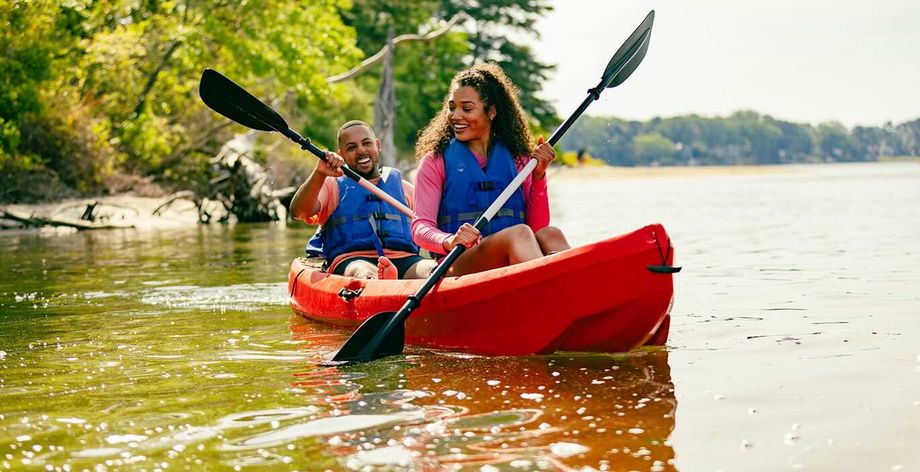
The more unique the eco-tour or sustainable team-building activity, the higher the level of attendee engagement. In Virginia Beach, the menu of outdoor and “eco-adventures” includes seasonal harvest tours, an eco-wildlife safari, and a winter wildlife boat trip. On the seasonal harvest tours, groups—accompanied by expert naturalists—take a journey into False Cape State Park to learn about native fruits, nuts and berries, then participate in creating treats with the bounty. Seasonal themed experiences offered through the park include “Edible Flowers and Greens,” “Blueberry Blues,” “Fall Harvest and Roots” and “Winter Greens.” On the eco-wildlife safari, small groups board a tram for a five-mile trip into the “scenic wild” of the Back Bay National Wildlife Refuge. There, they look for signs of bobcat, fox, deer, coyotes and other inhabitants; hear stories of shipwrecks in the Atlantic and life as it was lived in early Virginia; collect seashells; and see marsh birds and ghost crabs. The winter wildlife boat trip lets participants search for humpback and fin whales off the coast of Virginia Beach and possibly see brown pelicans, gannets and other sea birds. Each excursion is narrated by a trained aquarium educator.
Other unique options for eco-friendly team building activities planners might explore when looking at potential sustainable meetings destinations include:
• Cooking challenges, where participants learn sustainable cooking practices and partner to prepare sustainable menu items using locally sourced ingredients, while learning about food waste reduction. In Virginia Beach, farm-to-table cooking classes and interactive demonstrations (along with other classes, such as composting) are available at New Earth Farm.
• “Float trips” to remove debris and litter from waterways, followed by a stop at a local restaurant serving farm-to-table fare.
• Scavenger hunts with tasks like “take a photograph of a sea bird,” “find and retrieve one coconut, one banana, and one palm frond,” etc.
• Raft races, in which attendees build a raft with limited supplies and then race it.
• Eco-friendly design challenges, where teams design and create useful items or art from recycled materials.
• Energy efficiency competitions, in which teams analyze and propose solutions to reduce energy consumption in a particular place, such as an office, a home or even a meeting venue.
5. Re-define sustainability.
“Sustainable” team-building programs can center on giving back to the community in ways other than cleaning up the environment—i.e., providing services for people. Many CVBs partner with local entities to provide such team-building activities as beautifying schools in underprivileged neighborhoods (including painting murals, landscaping and building vegetable garden beds); cooking for and feeding people experiences homelessness; sorting donations at food banks; and lending a hand with special programs for underprivileged youth who participate in after-school programs.
Sponsored Content
 Virginia Beach Convention Center
Virginia Beach Offers a Wealth of Possibilities for Sustainable Meetings
From meeting and convention facilities to team building and ecotourism options, Virginia Beach provides all the elements needed for truly sustainable meetings and events.
“In today’s world, we’ve got to believe that if we all do our small part, like the ripples in the water, we can have a long-lasting impact on our environment,” said Sally Noona, CMP, director of convention sales, Virginia Beach Convention & Visitors Bureau. Virginia Beach makes it easy to turn that vision into a reality.
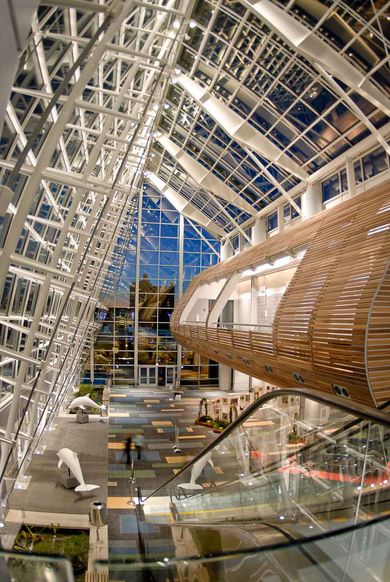
In 2010, the Virginia Beach Convention Center (VBCC) became the first facility of its kind in the U.S. to earn Leadership in Energy and Environmental Design (LEED) Gold certification for existing buildings from the U.S. Green Energy Council. This certification has since been renewed twice as the venue continues to uphold the high LEED Gold standard.
What’s more, the Virginia Beach Convention Center has implemented multiple green initiatives aimed at supporting sustainability. These center on recycling (everything from compacting and transporting comingled materials to an offsite recycling location to proper disposal of mercury from fluorescent lamps), energy usage reduction, water efficiency, waste reduction and environmentally friendly practices (such as composting and food inventory control). Ten raised garden beds can now be found behind the VBCC, a significant change from just a few years ago.
The VBCC has also been the recent recipient of three top sustainability awards bestowed by the Virginia Green Travel Alliance: Green Caterer of the Year, Most Innovative Green Projects, and Green Team All-Star Award. In addition to providing environmentally sustainable cuisine, convention center caterer Centerplate-SodexoLive! maintains an onsite seasonal herb and vegetable garden. And at the VBCC and elsewhere in Virginia Beach, meeting planners looking to minimize their group’s carbon footprint can request that food and beverages served at their events be sourced from local farms, like Salem Berry Farm, Coastal Cattle and Honey River Farm, to name a few.
In fact, Virginia Beach is a Farm to Table and Sustainable Seafood City, making it a top choice for fun, engaging, and unique team building as well as ecotourism activities. For example, tours of the city’s oyster farms offer a fascinating look at these marine mollusks and how they contribute to sustainability, namely by individually filtering up to 50 gallons of water daily. Several wind farms that will assist in filling Virginia Beach’s energy needs are currently under construction off the coast of the city. By 2026, the city will have 176 wind turbines, all of which will make for exciting new tour opportunities will be open for tours.
For more information on planning a Virginia Beach event, visit Virginia Beach Convention & Visitors Bureau