
While concerns around Covid-19 continue to dominate safety priorities for in-person events, worries related to civil unrest are increasingly on the minds of planners based in the U.S. In Northstar Meetings Group's most recent PULSE Survey, nearly 40 percent of respondents expressed that they were concerned or extremely concerned about risks associated with civil unrest, crime and similar issues.
"I'm worried that people will be wary of in-person gatherings of any size for a very long time, both due to Covid and civil unrest," wrote one respondent.
Another noted: "Covid is only one issue we are dealing with right now. The potential of violence or disruption from radicalized groups is quickly becoming every bit as significant and has the potential to further harm the meetings industry."
And another: "Even after COVID, political division is strong and will continue as we have no vaccine for it."
Following the Jan. 6 raid on the U.S. Capitol and its aftermath, event planners have been more carefully considering the risks such a combustible political environment could present to their own gatherings.
"People just feel a general level of unease and nervousness right now," says David Kelly, managing director of security consulting services for T&M USA, which handles risk assessment security for large-scale corporate, sporting and entertainment events. "They're more concerned about their security and having a good crisis plan in place. As events start happening again, you're going to hear that more."
Kelly is not alone in this observation. We spoke with a number of event security experts who discussed how concerns around civil unrest are reshaping security priorities as planners prepare to begin planning for the return of in-person meetings – and how planners can be sure they are prepared.
Increased Alertness
.jpg?tr=w-345%2Ch-173%2Cfo-auto)
IAVM's Mark Herrera will be the keynote speaker at Northstar Meetings Group's
Interact: Back to Booking digital event taking place on Tuesday, Feb. 23. He will be speaking on the topic "Risk Management Today: Basic Training for Meeting and Event Managers."
Register here.
Mark Herrera, director of education for the International Association of Venue Managers, oversees security training related to protecting a wide range of commercial venues, including convention centers, stadiums, performance halls and more. During the organization's town hall discussions and in other interactions with members, Herrera has seen a growing demand for guidance from his members related to security issues in the aftermath of the Jan. 6 attack.
"If there's an occurrence where there was a massive attack of any type — whether it's through civil unrest, whether it's vehicle-borne, or an improvised explosive device — anytime you have a facility that's been affected, it has a trigger effect on all the other venues and organizations," says Herrera.
He adds that when it comes to security threats, "domestic violent extremists" are getting a higher level of attention from him and his members than in previous years.
"The threat typically is within a 30- to 35-mile radius, so that they can conduct that pre-operational threat surveillance," says Herrera. He adds that while Covid-19 remains the top security issue for venues, "In the midst of this pandemic, we're very lean within our security postures — there's been a lot of furloughs, a lot of layoffs," and that means venues are that much more vulnerable to other threats.
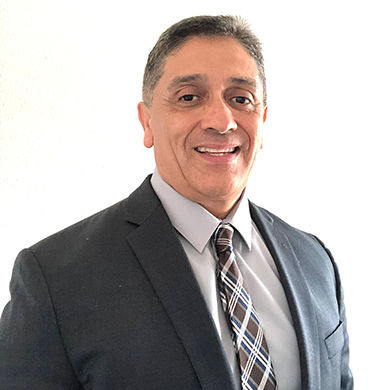 Mark Herrera, director of education for the International Association of Venue Managers.
Herrera gets the latest information on these risks in part through his work on the Department of Homeland Security's Cybersecurity & Infrastructure Security Agency as well as its Commercial Facilities Subsector Council, which he chairs. This information is then shared with IAVM members via direct emails and bi-weekly town halls, organized by venue types, while IAVM's Venue Safety and Security Committee draws on these to develop training programs and guidelines to put into practice over the long term.
"These emergency action plans have to be not only reviewed, but they need to be practiced on a regular basis," says Herrera, who worked in law enforcement for more than two decades prior to joining IAVM, including serving as detective for the Gang and Narcotics unit in Hobbs, Texas, a sergeant for the S.W.A.T. team and a trainer for DHS. He adds that, "If everybody follows those protocols, they're able to communicate this information across in the midst of crisis and things flow smoothly, but if politics attaches itself to your physical security measures, it weakens your organization and your environment."
The Value of Information

For Edward T. Cannon, vice president of security consulting services for T&M USA, protests and demonstrations have long been a standard part of any threat assessment and "was typically what we call the 'low risk'." But now he says civil unrest of all kinds is taking "a higher level of significance because unfortunately I don't think anybody believes that January 6 was the end."
Following the Capitol riot, state capitols and government buildings were alerted to tighten their security in the lead up to inauguration day, and Cannon expects an elevated level of caution will continue to be practiced at these venues.
"Do you need to be more cautious if you are in a state capital or in proximity to government buildings? I think the answer is 'yes,'" says Cannon.
But he and T&M's David Kelly emphasize that this is just one aspect of an event that planners should consider when assessing whether civil unrest or even peaceful protests could potentially create disruptions.
"There are deeper levels to go to really understand when your event might be intentionally targeted by protestors or subject to some sort of a demonstration," says Kelly. "Are any of the sponsors or speakers controversial? Is the theme or industry controversial? These are questions that corporate America is keenly aware of right now and event planners need to be, too — it's a politically sensitive time right now."
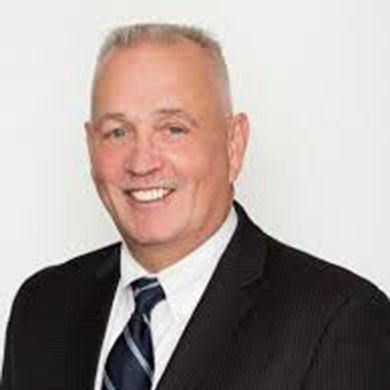 Edward T. Cannon, vice president of security consulting services for T&M USA.
Cannon gives the example of a corporate client that hosted a fundraiser for a political candidate that attracted a peaceful demonstration.
"Our security analysts were monitoring social media and were able to contact our security agents that were providing security at this event, who then share that intelligence with the police to let them know, 'Hey, there are six buses coming, they're going to arrive at 14:00 and stage at this location,'" says Cannon. "That was all picked up from open-source communication."
For a particular event, T&M will do deeper dives into the specific security issues that affect that venue, location or event. They pull from online sources as well as assessments and bulletins from NYPD Shield, DHS, FBI as well as private intel corporations that provide information in as close to real-time as possible.
"The real value is that we know our clients," says Cannon. "We see an alert and we understand which of our clients this may have an impact on."
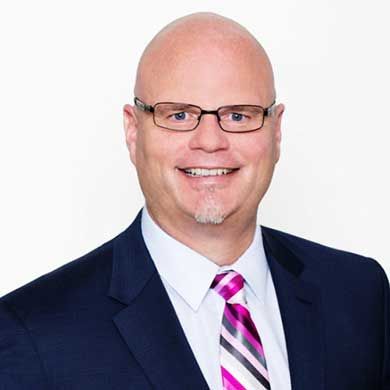 Dan Donovan, founder and managing partner of security firm Stratoscope,
Dan Donovan, founder and managing partner of security firm Stratoscope, echoes the value of this approach.
"We have to always be prepared first for protestors and secondly for the possibility that these protestors may include individuals with the intent to do damage or inflict harm," says Donovan, who has personally assisted with the security of such high-profile events as Amazon's AWS re:invent conference, Google Next and the last six Salesforce Dreamforce conferences (not to mention seven Olympic games, 12 Super Bowls and four NBA All Star weekends). "We've seen protestors at a number of events that we've been involved with and even seen them breach perimeters. How do we mitigate risk and what's the likelihood of it happening at a business event? The answer is really all based on intel."
Donovan stresses that intelligence is critical in determining what risks need to be considered and which risks need additional resources dedicated to mitigating them.
"While there is never a clear picture on the possibility of a dangerous incident the proper planning approach is to be prepared and ensure that the right resources are available to mitigate or respond and maintain a safe environment," he says.
Create a Comprehensive Picture
This gathering of intelligence begins long before an event takes place, and security experts urge planners to keep a keen eye out for potential or escalating risks in the days or months leading up to a gathering.
"Monitoring social media should be part of your security prep — what kind of chatter is going on leading up to an event and in real time," says Cannon. "What became clear in Washington [on Jan. 6] was that while intelligence may have been collected that could have given a heads up of what was going to happen at the Capitol, it either wasn't shared effectively, or wasn't sent up to the right level."
This kind of review is part of a comprehensive "all-hazards, written risk assessment" as Cannon calls it, which covers all major issues that could potentially surface, ensuring there are protocols in place to take action should a crisis indeed break out.
He adds that planners must be careful not to only focus on the last crisis and overlook the myriad potential threats an event can face. Kelly adds that a major weakness in many planners' risk-assessment plans is that they fail to update it regularly.
"Often what gets done is, 'Hey, pull out the folder from last year, and change the dates. Okay, we're good'" says Kelly. "That really doesn't cut it."
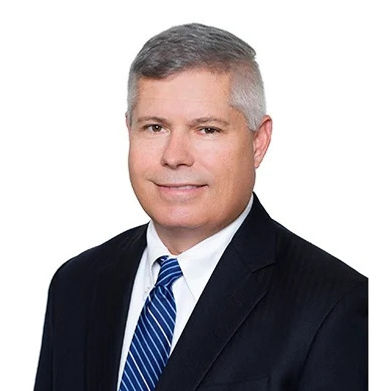 David Kelly, managing director of security consulting services for T&M USA.
For Kelly, a well-crafted threatened risk assessment is going to look at a variety of threat types — natural threats (such as wildfires or hurricanes), accidents (such as a truck spilling hazardous materials) and intentional acts (active shooters, thefts). It considers the type of facility, participants and potential negative impact of various scenarios in terms of economic impact, reputational damage to the organization and even injuries or casualties.
From there, the planner or their crisis-management advisor works out the steps that would be taken should any of these events transpire, clarifying who would do what and ensuring there is enough security staff to handle all variety of these issues.
For example, T&M handled the security for the 2020 CONEXPO-CON/AGG construction industry trade show, which took place March 10–14 last year, just as the threat of Covid-19 to the U.S. was becoming clear. Rapid changes to the program were required: setting up hand sanitizing stations, placing "ambassadors" at doorways to encourage social distancing and ensure doors were kept open, and even ending the event a day early as concerns mounted. But helping to facilitate all of that was the fact that the T&M team had a strong communication between the various security entities that they had explicitly defined long before the event began.
"You know in advance that this person's going to deal with operations, this person's going to deal with logistics, this is your fire department contact, local police contact, FBI," says Kelly. "You have all those in place and then you conduct tabletop exercises where you test the plan and that's where you find out if there's a communications gap somewhere."
From their command center in the convention center's boardroom, the T&M team was able to quickly check in or advise on next actions for the event planners, Las Vegas Metro PD, the County Fire Department, representatives of the event venue and more.
Responding in the Moment
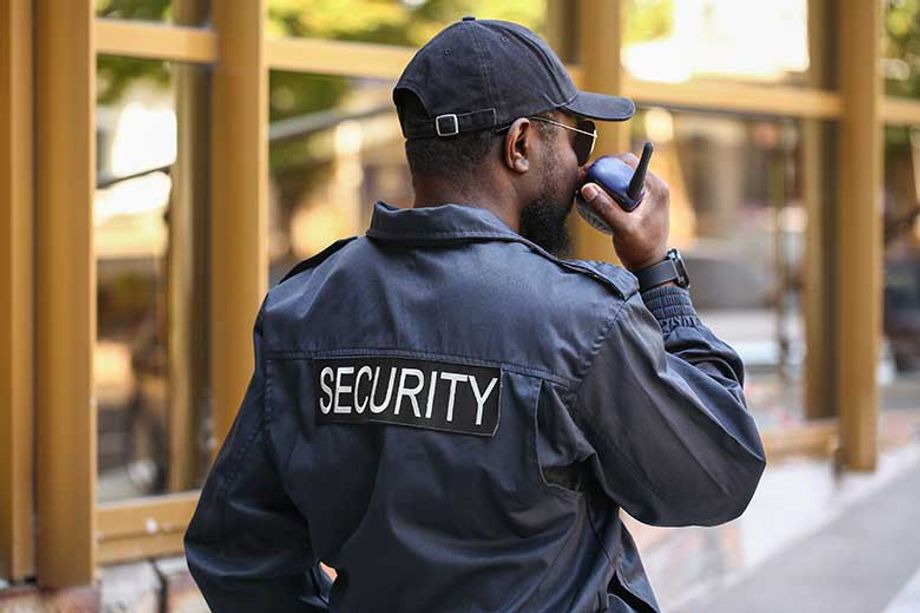
While numerous entities and countless decisions play a part in an effective security plan, often the effectiveness of a security plan comes down to the choices made by individuals on the ground, in the moment.
"Your No. 1 asset is your frontline staff," says IAVM's Mark Herrera.
This does not only refer to the dedicated security team for a venue — it could include those assisting at the registration desk, those greeting attendees as they arrive or any individual helping run the event the day of. When all of these people have been prepped to be on the lookout for anything suspicious and know how best to respond, it greatly increases the likelihood that any crisis will be averted or defused.
Herrera gives the example of a person approaching a convention center on a hot day wearing a heavy jacket.
"The voice inside you says that something is not right. But how do you handle that situation?" Herrera asks. "I could rely on those physical security measures of the building or I can intercept it outside with my frontline teams and before the person even makes it to the front door or the skin of my venue, I've already mitigated it."
The key is to approach the individual not in a way that conveys confrontation, but rather in a friendly way, perhaps taking the person aside and asking if they'd like a bottle of water, noting that they look hot in the jacket and asking if there's a reason they're all bundled up. It's what Herrera calls "risk mitigation through guest service interjection." In all likelihood, the person will offer an explanation that demonstrates they are no threat, perhaps removing the jacket or explaining they have a condition that makes it necessary for them to wear it.
"If I'm wrong in my risk assessment, I just showed you how much I care about you by offering you a bottle of water," Herrara says.
But if they do react with hostility, the frontline worker should seek ways to deescalate or get additional help.
"Despite how upset or angry they are, we want to try to empathize with them. We want to try to give them the benefit of the doubt," says Herrera. "A lot of people from a mental health perspective had been strained based on what we've currently gone through. You have to kind of factor that in and allow a little room for error and misunderstanding. But at the end of the day, there has to be that understanding that they still have to comply."
If they are behaving suspiciously, they may get nervous and realize they have been spotted. Chances are they will leave on their own, before even setting foot into the building. But if they look around suspiciously or respond with hostility, it may be necessary to escalate, asking them to leave or even getting the help of security to actually remove a noncooperative person.
That approach, multiplied across multiple checkpoints, or "layers" as Herrera calls them, throughout the building, will ensure that any concerning behavior will be identified and handled before it can grow.
"These emergency action plans have to be not only reviewed, but they need to be practiced on a regular basis," says Herrera. "If everybody follows those protocols, they're able to communicate even in the midst of crisis, and things flow very, very smoothly."